Shipping & Packing
Moving This Summer? When Shipping Boxes Beats Hauling Them
For a few boxes going a long way, ground shipping is often simpler than a trailer. For a whole house, it is not. The carriers' size limits, the Media Mail rule for books, and what to leave for the freight truck.
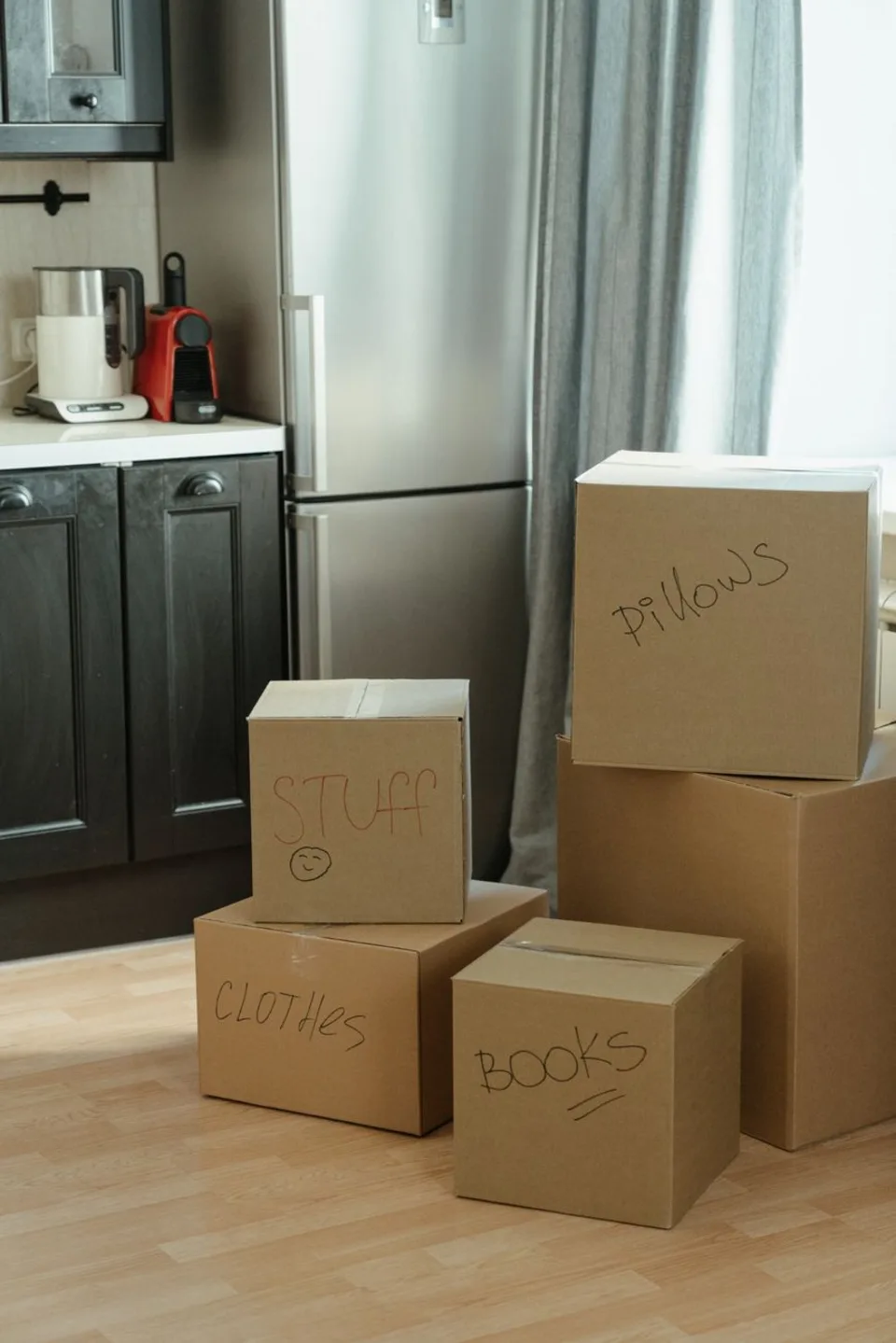
Short answer: if you are moving a few boxes a long way, especially books, clothes and kitchen things, shipping them by ground and driving light is often the simpler plan. If you are moving a whole house, or anything you cannot lift alone, it is not. The line between the two is the carriers’ size and weight limits, and those are published.
Summer is moving season around Magnolia: a lease ending, a job in another state, a kid heading off in August. The question at the counter is almost always the same. Which of this can go in a box on a truck, and which of it needs a truck of its own?
What fits on a parcel carrier
Each carrier publishes a ceiling, and the two that matter most for a move are these.
The Postal Service’s USPS Ground Advantage takes packages up to 70 pounds, with a maximum combined length and girth of 130 inches. Girth, in USPS’s words, “is the distance around the thickest part.” USPS publishes a 2 to 5 day delivery estimate and includes a base amount of insurance in the price, with more available. Those are USPS’s terms.
FedEx runs heavier. Its standard parcel services accept packages up to 150 pounds, but per FedEx an oversize charge applies to any package that exceeds 96 inches in length or 130 inches in length and girth, and an oversize package is billed at a minimum of 90 pounds whether or not it weighs that. So a long, light box of curtain rods can cost more to ship than a dense box of books.
Practical translation: a standard medium moving box, packed to 40 or 50 pounds, ships on any carrier without drama. A wardrobe box, a rolled rug, a bicycle, or a box you cannot get your arms around is where it stops being a parcel and starts being freight or a moving truck.
Books go Media Mail, and only books
The single biggest saving in a move by mail is USPS Media Mail, and it comes with rules that are enforced.
Per the Postal Service’s mailing standards, Media Mail is for “books, including books issued to supplement other books, of at least eight printed pages,” plus printed music, sound recordings, films, playscripts and manuscripts, and “computer-readable media containing prerecorded information.” The published weight limit is 70 pounds and the delivery estimate is 2 to 8 days.
The rule people miss: the box has to contain only qualifying items. Per USPS, “Media Mail and Library Mail are not sealed against postal inspection,” and mailing at that rate “constitutes consent by the mailer to postal inspection of the contents.” A box of books with a coffee maker on top is not a Media Mail box, and if it is opened it gets re-rated, held, or sent back. Pack the books alone and label them as books.
Books are also the heaviest thing most people own by the box, so this is where shipping beats hauling most clearly.
What not to put in a shipped box
Some of the standard moving-day pile cannot go on a parcel carrier at all, or has rules:
- Anything with a lithium battery on its own: spare laptop batteries, loose power-tool packs. Devices with the battery installed are fine; the lithium battery guide has the carriers’ limits.
- Flammables and aerosols: paint, propane, lighter fluid, most cleaning chemicals, hairspray in quantity. These are regulated hazardous materials on every carrier.
- Liquids in general are allowed but leak. Double-bag them or leave them behind.
- Cash, jewelry, original documents. Carry those.
- Perishables in a July box across three states. Eat them or toss them.
Furniture and the heavy stuff
A couch, a dresser, a mattress, a washer: these are freight, not parcels, and treating them as parcels is how people get a bill they did not expect. Freight moves on a pallet, by weight class and dimensions, on a different network with different terms, including the point that freight quotes are estimates until the carrier bills on actual weight and size. We coordinate less-than-truckload and hotshot shipments for exactly this, and the details, including what to expect on a freight quote, are on the freight shipping page.
For a single heavy piece going far, freight is sometimes cheaper than the truck rental plus fuel plus your weekend. For a full apartment, a rental truck or a mover almost always wins. Do the count honestly before deciding.
Packing for a move by mail
A box that is going through a sortation belt needs to be packed tighter than a box riding in the back of your own truck. The basics from the five packing mistakes all apply, and two of them matter more here: no room for the contents to shift, and tape in an H across every seam, top and bottom. Write the contents and your name on the inside of the lid, so a torn label is not the end of it.
Address it to yourself at the new place, and confirm someone will be there or the building has a package room. A box delivered to an empty house sits on a porch. Delivery status is the carrier’s report of where the driver left it, and any question about that goes to the carrier’s tracking and customer service.
Time it so the boxes arrive after you do, not before. Ground estimates are the carriers’ estimates; build in a day or two.
Bring it in
If you would rather not guess at the limits, bring the boxes in and we will weigh and measure them, quote each one across the carriers we ship with, and tell you which ones are cheaper by a different route. We build custom-sized boxes on site for the awkward items, and we can pack the fragile ones so they hold up. The full list of what we do is on the services page.
The counter is at 9311 FM 1488 Road, Suite 30, Magnolia, Monday through Friday 9 to 6 and Saturday 10 to 4. The number is 936-444-9711.
Topics
- moving
- shipping
- ground shipping
- Media Mail
- freight
- USPS
- FedEx
- Magnolia TX
Stop in or give us a call
9311 FM 1488 RD, Suite 30, Magnolia, TX 77354 · Mon–Fri 9–6 · Sat 10–4